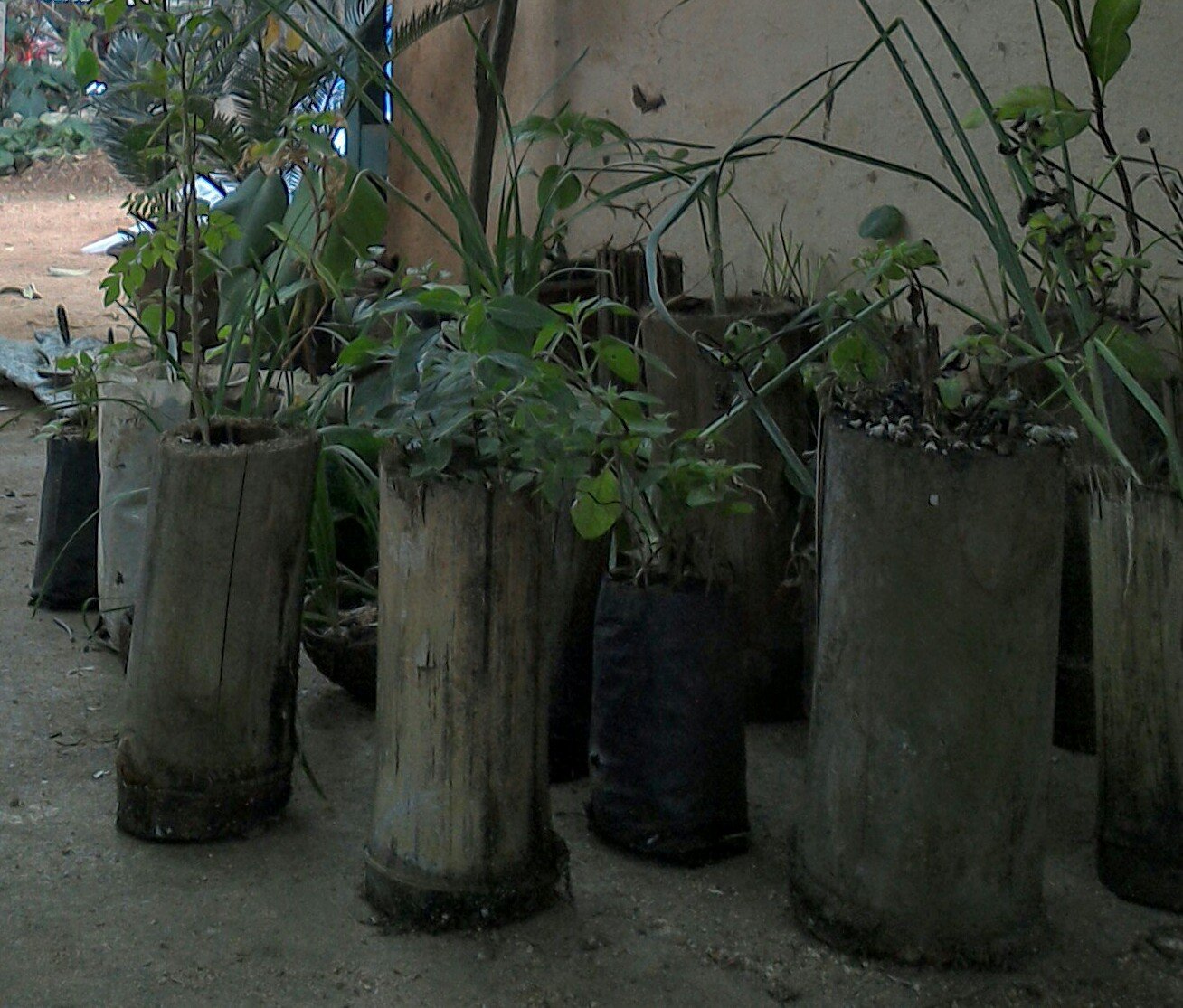
Prakriti Food promotes Kitchen Gardening – growing your own herbs, vegetables, and fruits at home, whether in a backyard or on a sunny windowsill. It is an invitation to reconnect with food and understand the ecosystem in which it grows.
We imagine this initiative as a circle of shared learning for anyone interested in plants and sustainable living. Through conversations and workshops, we explore how to grow food at home, compost kitchen waste, make bio-enzymes, and adopt everyday practices that are gentle on the earth.
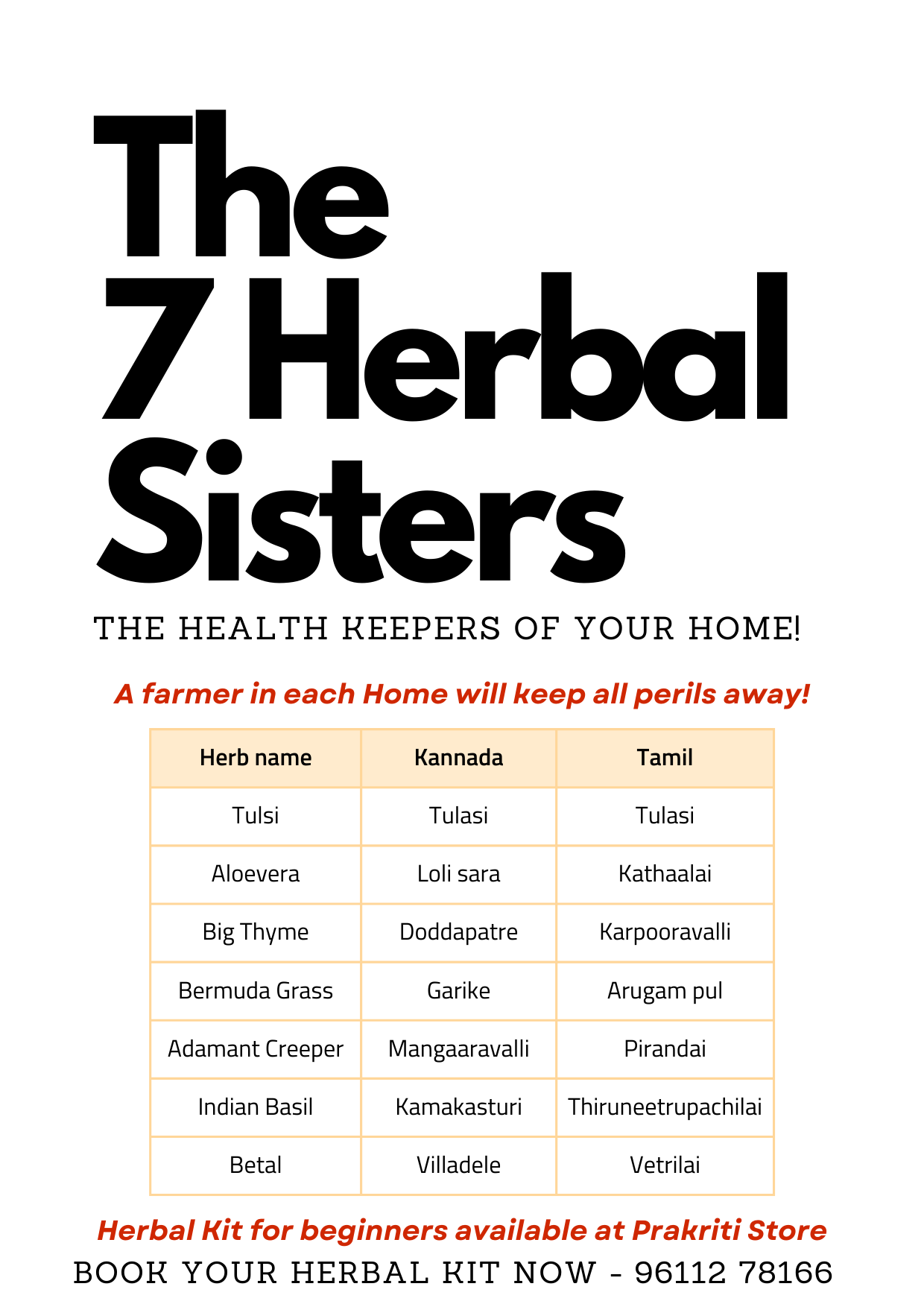
Currently, we offer a thoughtfully curated set of easy-to-grow saplings, chosen to support the needs of a healthy family and help beginners start their kitchen garden with confidence.
1. Tulasi
Useful parts: Leaves, stalk
Used in treating: Has capacity for immediate relief for Cough, breathlessness, asthma, nerve issues, other phlegm related problems, fever, blocked nose.
Method of use
1. Boil leaves with turmeric and inhale vapor.
2. Use with other medicinal plants in preparation of kashaya, tulasi leaves soaked in water and consumed everyday relieves diabetes
3. Paste of tulasi, lavanga and ginger can be applied to the forehead.
4. Add tulasi to bathing water for avoiding bad smell and also skin related problems
5. Add a tulsi leaf to the water bottle that you carry to office/school for improving body immunity
2. Doddipatre
Useful parts: Leaves, tender stalk
Used in treating : Cough, breath, phlegm and throat related problems, indigestion, inner fever, fever, blockage of nose, asthma, has lots of omega 6 for curing osteoporosis, heals cancer, anti-depressant, kidney stones
Method of use
1. Grind leaves, extract juice and drink with honey.
2. Boil the leaves in water and inhale the vapor.
3. Smell leaves of doddipatre for calmness of mind.
4. Asthma patients to take doddapatre juice along with palm jaggery and honey every day.
5. Boil doddapatre juice with water to half the quantity and regularly consume to expel poison in the respiratory tract of chain smokers
3. Amruthaballi
Useful parts: Leaves, stem
Used in treating : facilitates smoother digestion, common cold, headache, oral care, diabetes, stomach ulcers, joint pains, prolonged fever, constipation, weight loss, brain power, skin care, fighting cancer, ageing and longevity
Method of use :
1. Eating freshly plucked leaves from the plant
2. Boiling the leaves and making kashaya
3. Add ginger, pepper corns, tulasi leaves, leaves and stem of amruthaballi in water and boil for as we do for tea and consume for good health
4. Brahmi
Useful parts: Leaves, tender stalk
Used in treating: eye related problems, memory power, avoids Alzheimer’s, dementia, elephantiasis, increases hemoglobin count, use minimum weekly once for children for brain development
Method of use: Eating freshly plucked leaves from the plant, cooking as a soppu
1. Consuming brahmi Juice heals stomach related disorders.
2. Applying of brahmi juice heals wounds
3. Make chutney with coconut
5. Pudina
Useful parts: Leaves, tender stalk
Used in treating: Cough, cold, headache, digestion, skin refreshment, mouth freshener, improves immune system
Method of use: Garnishing in cooking, making kashaya
1. Inhale pudina vapor for headaches, morning sickness, clearing respiratory tract, prevents vomiting
2. Pudina paste has a cooling effect on a painful spot, makes the skin glow, it helps heal itching, cures insect bites, reduces swelling
3. While making tea, add a few leaves of pudina for good digestion
4. Add mint leaves to your / your babies bath water to feel better
6. Aloe Vera
Useful parts: Gel inside the leaves
Used in treating: protects and replaces dead cells in the skin, relieves constipation and piles, protects from U V Radiation, treatment of dandruff, hair fall, diabetes
Method of use: Please refer to internet for usage options in detail. Please take extra care for internal consumption
1. Consume aloe vera juice in empty stomach in the morning. Wash the gel well, many times to remove the bitterness.
2. Lemon juice combined with aloe vera gel cures pimples and black heads
3. Scars disappear if the gel is applied regularly
7. Nelabasale
Useful parts: Leaves, tender stalk
Used in treating: improves immunity, induces digestion, relieves constipation, produces new blood cells, reduces body heat, rejuvenates tired body, diabetes
Method of use
1. The paste of Nelebasale can be applied on prickly heat, wounds for relief
2. Add nelabasale while making dhal, soup can be prepared
8. Betel leaves
Useful parts: Leaves, tender stalk
Used in treating: Cough, breathlessness, phlegm, nose blockage, poisonous bites of insects, lack of appetite, indigestion, throat pain, increases body's resistance, joint pain, reduces fat in the body, teeth related
Method of use: Direct chewing of fresh leaves, Kashaya
1. Add honey with betel leaves juice for cough, phlegm, etc.
2. Take 2 to 3 leaves with Dhruva grass, 2 black pepper corns to make kashaya
3. Add cloves, cinnamon, cumin, i small betel leaf and boil in water. Drink twice a day for respiratory issues.
4. Can be eaten regularly after lunch, relieves toothaches, strengthens gums
5. Juice of betel leaves to be applied regularly for a few days for joint pain